SIDNEY SHELDON
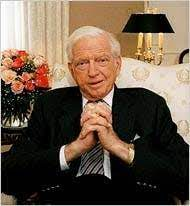
The narrative trajectory of Sidney Sheldon stands as one of the most remarkable artistic odysseys in twentieth-century American pop culture. Before he ever became a globally recognized master of the modern thriller novel, Sheldon was already an accomplished architect of entertainment across three entirely distinct mediums: the Broadway theater, classical Hollywood cinema, and the golden age of American network television. He possessed a rare, chameleon-like creative instinct that allowed him to master the distinct structural mechanics of each discipline he touched. Over a career spanning more than six decades, Sheldon accumulated an extraordinary triad of achievements, securing an Academy Award, a Tony Award, and multiple Emmy Award nominations, before reinventing himself in his fifties as a literary novelist whose books would go on to sell well over three hundred million copies across the globe. His life story is a testament to the power of relentless reinvention, absolute discipline, and an uncanny ability to connect with the universal human appetite for suspense, glamour, and narrative momentum.
Born Sidney Schechtel on February 11, 1917, in Chicago, Illinois, the future author was raised in an environment defined by financial instability and personal hardship. His father, Ascher "Otto" Schechtel, was a jewelry store manager, and his mother, Natalie Marcus, worked tirelessly to keep the family afloat. Both parents were of Russian Jewish descent, and neither had completed an extensive formal education. The onset of the Great Depression battered the family financially, forcing them to move frequently between cities in search of steady work. Despite the economic pressures that dominated his upbringing, young Sidney demonstrated an early affinity for words and storytelling. At the age of ten, he earned his first literary compensation when he sold a poem for five dollars, an event that sparked his lifelong belief that writing could serve as both an artistic passion and a legitimate trade.
Sheldon attended East High School in Denver, Colorado, where he continued to cultivate his literary instincts. Upon graduating, his academic promise earned him a scholarship to Northwestern University. During his brief time at Northwestern, he threw himself into creative activity, writing short plays and sketches for local drama groups. However, the economic devastation of the Great Depression soon cut his formal education short. Unable to maintain his living expenses even with a scholarship, he dropped out after just six months to help support his family. To bring in income, he took on a series of odd jobs, working as a shoeshine boy, a sales clerk, and a night clerk at a music shop. These early hardships did not break his creative spirit; instead, they instilled in him a relentless work ethic and a practical understanding of survival that would later permeate the struggles of the resilient protagonists in his fiction.
Determined to forge a life in storytelling, Sheldon set his sights on Hollywood. In 1937, at the age of twenty, he traveled to California with little money but boundless ambition. Hollywood in the late 1930s was a bustling factory system, and breaking through the studio gates required perseverance. Sheldon eventually found a entry-level foot in the door as a reader, analyzing and reviewing scripts for major studios such as Universal and 20th Century Fox for twenty-two dollars a week. Reading hundreds of screenplays allowed him to dissect the underlying architecture of dramatic pacing, character entrance, dialogue, and narrative conflict. He began writing low-budget screenplays on speculation, collaborating with other young writers to sell stories for lower-tier feature films, often known as B-movies. His early screenwriting credits included titles like South of Panama, Gambling Daughters, and Borrowed Hero, which helped him establish a reputation as a fast, reliable craftsman.
The momentum of Sheldon’s early Hollywood career was briefly interrupted by the outbreak of World War II. He enlisted in the military, serving as a pilot in the War Training Service associated with the United States Army Air Corps. After his unit was disbanded and he received a medical discharge before experiencing combat, Sheldon relocated to New York City to test his talents on the theatrical stage. Broadway during the 1940s was experiencing a golden era, and Sheldon adapted to the live theater medium with remarkable speed. Collaborating with playwright Ben Roberts, he began rewriting and developing musical comedies. His work ethic during this period became legendary; at one historic juncture, Sheldon achieved the extraordinary feat of having three hit musicals running simultaneously on Broadway: a heavily revised adaptation of The Merry Widow, Jackpot, and Dream with Music.
This theatrical triumph brought Sheldon back to the attention of major Hollywood studios, launching a period of exceptional cinematic success. Metro-Goldwyn-Mayer and Paramount Pictures actively courted his screenwriting talents. In 1947, Sheldon wrote the screenplay for the romantic comedy classic The Bachelor and the Bobby-Soxer, starring Cary Grant, Myrna Loy, and a young Shirley Temple. The film was a critical and commercial smash, praised for its witty dialogue and deft handling of romantic misunderstanding. The crowning achievement of this era arrived at the 20th Academy Awards, where Sheldon won the Oscar for Best Original Screenplay. Winning the highest honor in film at just thirty years old solidified his status as one of Hollywood’s premier writing talents.
Over the next decade, Sheldon worked on some of the most celebrated musical and dramatic film productions of the studio era. He co-wrote the screenplay for the iconic 1948 musical Easter Parade, starring Judy Garland and Fred Astaire, and served as the sole screenwriter for the 1950 film adaptation of Irving Berlin’s Annie Get Your Gun. His versatile pen moved effortlessly between light comedy, high-stakes drama, and vibrant musical extravaganzas. He stepped behind the camera as a director for the 1953 comedy Dream Wife, which he also co-wrote. During these Hollywood years, Sheldon continued to maintain his ties to the theatrical world in New York. In 1959, he reached another career high point on Broadway by writing the book for the musical Redhead, starring Gwen Verdon. The production was a major success, winning six Tony Awards, including the award for Best Musical, which earned Sheldon his prestigious Broadway trophy.
As the landscape of American entertainment shifted in the late 1950s and early 1960s with the rapid expansion of broadcast television, Sheldon recognized a new frontier for long-form narrative storytelling. While many established film writers viewed television with suspicion, Sheldon embraced the medium’s relentless pace and vast reach. His foray into television began when he conceived a sitcom centered on the concept of identical cousins with contrasting personalities. Starring teenage actress Patty Duke, who had recently won an Academy Award for her performance in The Miracle Worker, The Patty Duke Show premiered in 1963 and became a major hit. In an extraordinary display of productivity that remains virtually unmatched in television history, Sheldon wrote almost every single episode of the series himself during its multi-year run, maintaining control over character development and comedic timing.
Following the success of that series, Sheldon struck a deal with Screen Gems to create and produce additional television properties. In 1965, he launched I Dream of Jeannie, a fantasy sitcom starring Barbara Eden as a 2,000-year-old genie and Larry Hagman as the American astronaut who frees her. The show became an immediate pop-culture phenomenon, running for five seasons. Sheldon created, produced, and penned the vast majority of the show’s episodes. Because he was writing so many scripts concurrently while still contributing to other projects, he often resorted to using various pseudonyms, such as Mark Rowane, Allan Devon, and Christopher Golato, to prevent his name from filling the entire screen during the opening and closing credits. Later in his television career, he created the iconic glamorous detective series Hart to Hart, starring Robert Wagner and Stefanie Powers, which aired in 1979 and ran for five successful seasons.
Despite achieving pinnacle success across film, theater, and television, Sheldon felt a subtle artistic frustration building as he entered his fifties. Film and television were inherently collaborative media, subject to the notes of studio executives, the budgets of producers, the interpretations of directors, and the physical constraints of shooting schedules. Sheldon longed for a medium where he possessed total creative autonomy, where every word, setting, and plot twist belonged entirely to his imagination. He decided that the novel offered the absolute creative freedom he craved. In the late 1960s, while still managing the grueling daily schedule of producing and writing television shows, he established a rigorous personal routine. Every morning from nine until noon, he instructed his secretary to hold all phone calls while he dictated the manuscript of his first novel to a stenographer, turning his attention to television studio operations only after his daily fiction quota was completed.
That initial literary experiment resulted in The Naked Face, published in 1970. The novel was a tight, psychological thrill-ride about a psychoanalyst who finds himself framed for murder and targeted by unknown assassins. The book received critical acclaim and earned a nomination for the Edgar Allan Poe Award for Best First Novel from the Mystery Writers of America. While it was not an immediate runaway commercial blockbuster, it demonstrated that Sheldon could successfully translate his visual screenwriting sensibilities onto the printed page. The experience energized him, confirming that his future lay in long-form narrative fiction.
It was his second novel, published in 1974, that fundamentally altered the landscape of commercial publishing and made Sidney Sheldon an international household name. The Other Side of Midnight was a sweeping, multi-generational tale of passion, revenge, ambition, and betrayal set against the backdrop of World War II and the jet-setting elite of post-war Europe. The book struck a powerful chord with the reading public, climbing to the number one spot on The New York Times Best Seller list and remaining on bestseller charts for over a year. It established the structural formula that Sheldon would refine and perfect over the subsequent three decades: high-stakes international plotting, meticulous research, luxurious global settings, jaw-dropping narrative reversals, and, above all, strong, complex, resilient female protagonists fighting against ruthless antagonists in male-dominated worlds.
Throughout the 1970s, 1980s, and 1990s, Sheldon produced a unbroken sequence of global bestsellers that defined the contemporary thriller genre. In 1977, he published A Stranger in the Mirror, a sharp look at the dark, hollow underside of Hollywood stardom. This was followed in 1980 by Rage of Angels, which chronicled the rise of Jennifer Parker, a brilliant defense attorney navigating the deadly intersections of the American judicial system, organized crime, and high-level political power. Master of the Game, published in 1982, is widely considered by critics and readers to be his masterpiece. Spanning over a century and moving from the treacherous diamond fields of nineteenth-century South Africa to the corporate boardrooms of modern Paris and New York, the novel traced the ruthlessly ambitious Blackwell family and their multi-generational empire. Master of the Game exemplified Sheldon's ability to combine epic scope with intense character drama, captivating millions of readers worldwide.
Sheldon’s literary output continued unabated with novels like If Tomorrow Comes in 1985, which introduced the charismatic art thief Tracy Whitney and popularized the high-tech heist thriller format. Windmills of the Gods in 1987 explored political intrigue and international diplomacy, while The Sands of Time in 1988 pitted Basque freedom fighters against fanatic military huntsmen in Spain. Subsequent works, including Memories of Midnight, The Doomsday Conspiracy, The Stars Shine Down, Nothing Lasts Forever, Morning, Noon and Night, The Best Laid Plans, Tell Me Your Dreams, The Sky Is Falling, and Are You Afraid of the Dark?, further cemented his status as a publishing powerhouse. Each release became an instant publishing event, routinely printing in massive initial press runs and translated simultaneously into dozens of foreign languages.
The thematic signature of Sheldon’s fiction was his revolutionary placement of women at the center of high-stakes action and intrigue. At a time when commercial thrillers were dominated by male detectives, spies, and soldiers, Sheldon chose to write primarily about women who were intelligent, resourceful, determined, and capable of overcoming immense trauma, corruption, and systemic oppression. His heroines were never passive victims waiting for rescue; they were brilliant strategist doctors, cunning lawyers, ambitious executives, and clever revenge-seekers who learned to master the rules of dangerous games and turn the tables on their oppressors. Readers around the world, particularly women, responded powerfully to these portrayals of agency, strength, and triumph.
Another defining aspect of Sheldon’s process was his devotion to research and atmospheric realism. Although his novels featured glamorous, larger-than-life scenarios, he refused to write about locations he had not personally visited or professions he had not thoroughly investigated. Before writing a novel set in a foreign city, a psychiatric hospital, an art auction house, or a top-secret military installation, Sheldon would travel to the location, interview experts, consult doctors, lawyers, and law enforcement officials, and immerse himself in the local atmosphere. This dedication to factual grounding gave his high-octane fiction a sense of authenticity that kept readers immersed in the illusion.
His writing methodology was uniquely tailored to his background as a dramatist. Rather than sitting at a typewriter or keyboard, Sheldon dictated his entire novels to a secretary or into a dictaphone. He viewed storytelling as an oral tradition, believing that dictating allowed him to hear the rhythmic cadence of the dialogue and sense the exact moment a scene began to drag. He would dictating up to fifty or sixty pages a day, which were then typed up for his review. He was a ruthless self-editor, often rewriting a complete manuscript dozens of times, stripping away unnecessary prose, tightening suspense, and polishing plot twists until every chapter ended on a compelling hook that forced the reader to turn the page. This technique gave his novels their signature breakneck velocity.
In his personal life, Sheldon experienced both deep devotion and tragic loss. Following a brief early marriage to Jane Kaufman Harding in 1945, Sheldon married the stage and screen actress Jorja Curtright in 1951. Their union was a deeply supportive artistic partnership that lasted for thirty-four years. The couple had two daughters, Mary, who grew up to become a successful author in her own right, and Alexandra, who tragically passed away in infancy. Jorja was Sheldon's primary confidante and first reader, offering constructive criticism on his screenplays and early novels until her death from a heart attack in 1985. Sheldon was devastated by her loss, but he eventually found companionship again, marrying Alexandra Kostoff in 1989, who remained by his side for the rest of his life.
In his later years, Sheldon reflected on his astonishing career in his 2005 autobiography, The Other Side of Me. The memoir offered readers an intimate glimpse into his childhood struggles during the Depression, his early battles with bipolar disorder, his rise through the Hollywood studio system, and his personal philosophies on creativity and resilience. Even in his eighties, he retained a youthful enthusiasm for storytelling and a deep gratitude for his global readership. According to Guinness World Records, Sheldon became one of the most translated authors in the world, with his books published in over fifty-one languages and sold in more than one hundred and eighty countries.
On January 30, 2007, just twelve days short of his ninetieth birthday, Sidney Sheldon passed away from complications of pneumonia at Eisenhower Medical Center in Rancho Mirage, California. His passing marked the end of an extraordinary life that bridged the classical era of Hollywood studio storytelling and the modern global publishing industry. He was cremated, and his ashes were interred at the Westwood Village Memorial Park Cemetery in Los Angeles, leaving behind an unmatched legacy of creative output.
The ultimate legacy of Sidney Sheldon rests not merely on the massive volume of his sales, but on his mastery of narrative architecture across every medium he entered. He was a true populist storyteller who understood that regardless of whether an audience was sitting in a Broadway theater, watching a silver screen in a movie hall, tuned into a television set, or reading a paperback late into the night, the fundamental requirement of narrative art remained the same: to make people care deeply about the characters and desperately want to know what happens next. Through his pioneering television creations, Oscar-winning screenplays, and globally beloved thrillers, Sidney Sheldon earned an enduring place as one of the premier entertainment architects of the twentieth century.

Comments
Post a Comment