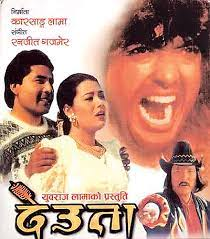
Directed by visionary filmmaker Tulsi Ghimire, the iconic 1991 Nepali feature Deuta stands as a monumental landmark in the history of Nepali cinema. The narrative weaves an emotionally layered love triangle that unfolds against both urban expectations and rural simplicity. The story revolves around an artistic city woman played by debutante Srijana Basnet, who travels to a quiet remote village to spend time with her aunt and refine her painting skills, avoiding an arranged marriage. There, she encounters two contrasting figures: the gentle Sonam, portrayed by Shrawan Ghimire, and the fiery, deeply complex Shankar, played by Rajesh Hamal. As relationships evolve and secret sacrifices come to light, the characters navigate intense moral dilemmas, romantic tensions, and unexpected heartbreaks that test their devotions.
Rajesh Hamal’s portrayal of Shankar is widely celebrated as a career-defining turn that cemented his status as the "Mahanayak" of the Nepali film industry. Hamal captures the raw anguish, intense loyalty, and rugged passion of his character with tremendous gravity, bringing emotional depth to every scene. Opposite him, Shrawan Ghimire brings a serene and grounding presence that perfectly balances Shankar’s explosive nature, while Srijana Basnet delivers a remarkably natural debut performance that guides the audience through the story’s emotional core.
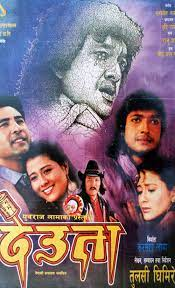
Beyond its stellar performances, Deuta excels in its technical craftsmanship and melodic musical score composed by Ranjit Gazmer. Timeless tracks such as "Piratiko Meetho Tirsana" and "K Vanne Hamro Samaya" enhanced the film's atmospheric charm, embedding themselves into Nepali pop culture for decades to come. Tulsi Ghimire’s direction combines rich visual storytelling with sharp dialogues, capturing the breathtaking landscapes of rural Nepal alongside intimate human drama. Ultimately, Deuta remains a beloved cult classic, remembered not only for its box office triumphs and dramatic resonance, but also for defining an entire golden era of storytelling in Nepali cinema.


Comments
Post a Comment